Transylvanian Chicken Soup (Hús Leves)
Transylvanian chicken soup is a traditional, slow-simmered broth made from bone-in chicken, root vegetables, and whole spices. Known locally as Hús Leves, it's a staple of Sunday lunches and festive meals across Transylvania.
This soup reflects Transylvania's multi-ethnic heritage, blending Hungarian tradition with rustic, local character. It's comforting, nourishing, and full of old-world charm.

Transylvanian Hús Leves isn't flashy, but it's quietly powerful. The food that feeds your soul as much as your body. It's warm, steady, and full of care. It takes patience, yes, but it asks little in return besides a bit of time and love.
So the next time you need a comfort food, want to bring people together, or feel like reviving old traditions, start with a pot of hús leves. And when you finally sit down to that first spoonful, you'll understand why this humble soup is anything but ordinary.
In our family, this soup was always simmering on Fridays, for the weekend. Grandma often used an old rooster or a couple of chicken backs she'd saved in the freezer. The broth always came out golden and clear, and its aroma filled the house long before mealtime.
Common Variations
Semolina Dumplings (Grizgaluska) - Instead of noodles, fluffy dumplings are a popular option.
Mixed Meats - some families combine chicken and beef for complexity.
Marrow Bones - Add beef marrow bones for a richer flavor.
Why You'll Love It
This Transylvanian Chicken soup isn't just a soup - it's the taste of home. One spoonful of its rich, golden broth brings warmth, calm, and a sense of nostalgia. Whether you're feeling under the weather or simply homesick, this soup gently restores both body and soul.
- comfort food
- deeply nourishing
- versatile
- a family tradition
- balanced, clean flavors
- brings people together
- Everyone loves it

Do you want to check out more Transylvanian soup recipes? The Hús Leves and the Cabbage Soup (Káposzta Leves) are built on slow-simmered broths, with deep, comforting flavors. Sour elements like lemon show up in soups like Greek Chicken Soup (Ciorbă a la Grec) or Tripe Soup (Ciorbă the burtă).
What You Need for the Hús Leves
This soup is built on humble, hearty ingredients that come together to create deep, comforting flavor.
- Bone-In Chicken - use a soup hen, rooster, or bone-in parts like drumsticks, thighs, wings, and backs. Older birds have more flavor and gelatin, which gives the broth richness and depth.
- Carrots - Peeled but kept whole or halved. They add sweetness and color to the broth.
- Parsnips - Essential for authentic Hungarian/Transylvanian broth flavor. Slightly peppery and earthy, they balance the sweetness of the carrots.
- Celery Root - It gives a deep, savory flavor. If unavailable, celery stalks are a fine substitute. Adds a backbone to the broth's aroma.
- Yellow Onion - Add sweetness and complexity.
- Peppercorns - Add whole for a gentle, warming heat. Never use ground pepper - it clouds the broth.
- Vermicelli (or Cérnametélt) - these thread-like noodles are the traditional pasta served in hhs leves.
- Chicken Bouillon Powder and Cubes - enhance the flavor if your soup lacks depth (e.g., using young chicken or lean cuts), but it should be used sparingly and thoughtfully in traditional soup. It's a flavor adjuster. Start with a small amount and adjust near the end.
- Parsley (optional) - brightens the flavor and freshens the soup
- Salt - to taste. Start with a small amount and adjust near the end.
- Vegetable Oil - isn't always included, but some of us use a small amount at the start to saute the chicken and carrots before adding water. Helps create a richer, more golden broth with a touch of roasted flavor.
- NOTE: If we use old birds, like a rooster, I leave it out, because the broth will get more golden and greasy.

How to Make the Transylvanian Hús Leves
In a large stockpot, heat the oil over medium-high heat. Add the chicken pieces and carrots. Saute until lightly golden (about 7 minutes). This deepens the flavor and gives the broth a beautiful golden hue.
Add the rest of the vegetables whole (or chopped into bigger pieces), along with salt, peppercorns, chicken bouillon cubes (and powder), green pepper, onion, and the fresh parsley (optional).

Then pour in the cold water. Reduce the heat to the lowest simmer and cook uncovered for 1.5 hours or until chicken and vegetables are soft and tender.
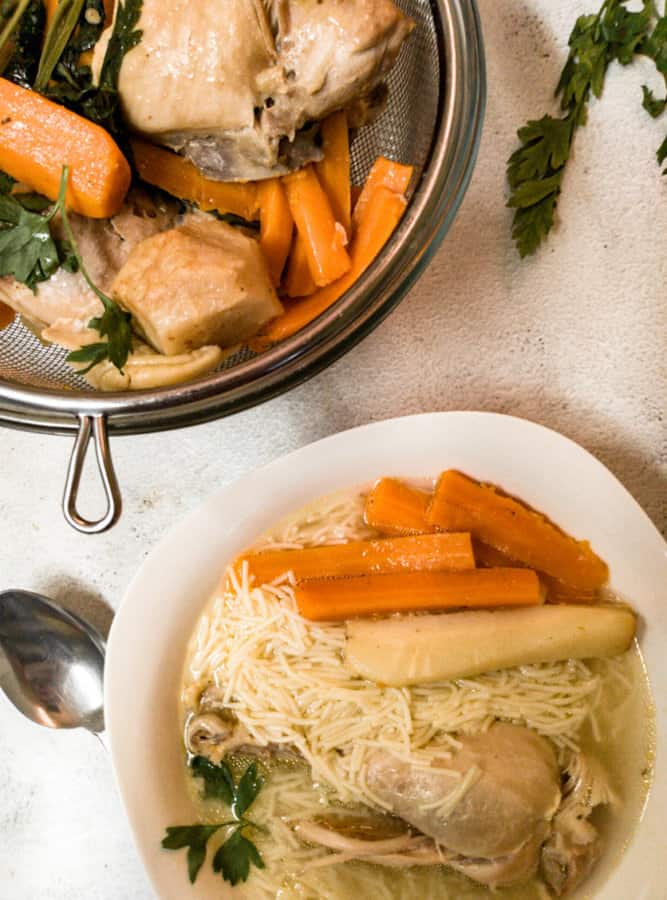
When the chicken is tender and the broth is flavorful, remove the meat and vegetables. Strain the broth through a fine mesh sieve (strainer). Taste and adjust with chicken bouillon powder if needed.

In a separate pot, cook the fine egg vermicelli pasta noodles according to package directions. Drain and rinse with cold water to stop cooking.
Pour the pasta into the broth and slightly mix it.

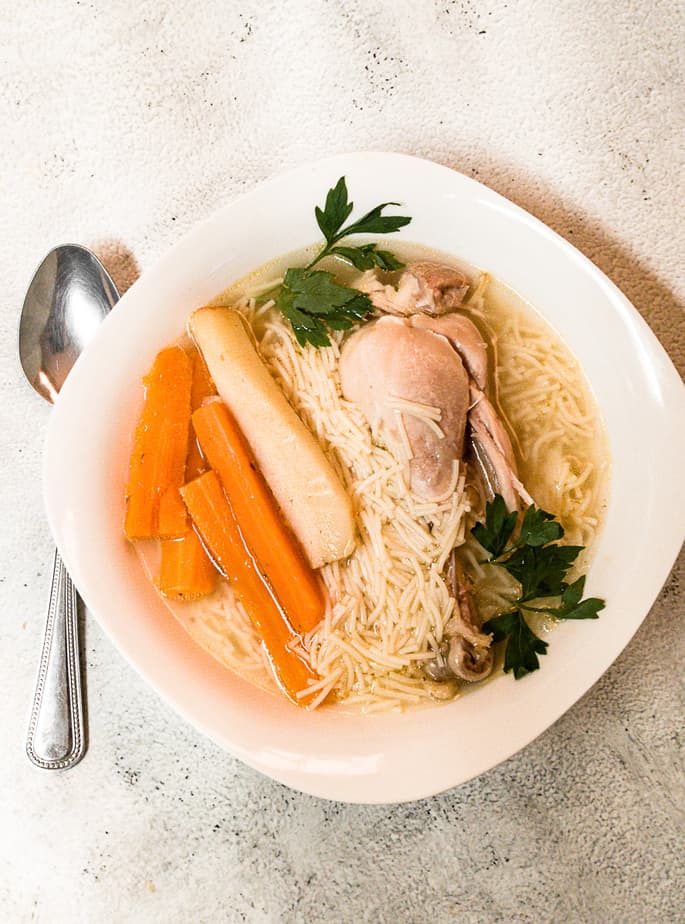
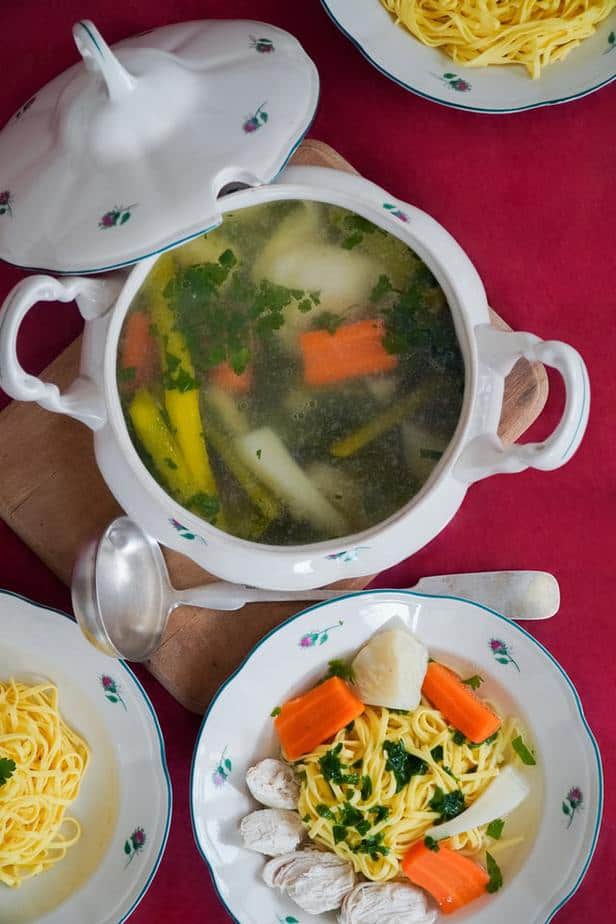
Serve hot with the tender meat and vegetables on the side. Sprinkle with chopped fresh parsley (optional).
Tips for the best Chicken Soup
- Start with cold water: always! This allows the flavors to slowly release and helps create a clear broth. Starting with the hot water can "seal" the meat too fast and resulting in a dull, cloudy soup.
- Keep it low and slow: This is the secret to a clear broth. High heat makes it cloudy. Look for just a few bubbles gently rising at the surface.
- Skim the Foam: In the first 30 minutes, you'll see grayish foam rise to the top. Skim it off with a spoon. This step is essential for a clean, bright-tasting broth.
- Don't stir! Let everything stay still while cooking.
- Use old hens and bone-in meat if possible: old hens offer richer flavor than tender young cuts. The Soup hens, chicken backs, wings, or even rooster are traditional and more flavorful than boneless cuts.
- Keep veggies whole: don't chop them into small pieces. They'll break down and cloud the broth. Leave them whole or halved so they can be easily removed later and served as part of the dish, or as part of another course.
- Make ahead: hús leves tastes even better the next day. Just reheat gently.
- Cook noodles separately: Always boil the noodles separately and add them to the soup when the broth is ready and still hot.
Common Questions
What's the difference between Hús Leves and regular chicken soup? Hús Leves is clear, elegant, and made slowly, with whole vegetables and bone-in meat. If you want, you can serve the vegetables and the meat with another course, or with the hús leves (like how the photos are showing).
Can I use boneless chicken? You can, but it won't have the same richness. Bone-in meat with skin gives better flavor, body, and nutrition.
Why is there oil floating on top? That's natural fat from the meat. If it's excessive, skim some off with a spoon or let the soup chill and remove the fat layer once called. A little fat adds flavor, but too much can feel heavy. Personally, that's the soup I want to achieve when I make this soup! It's traditional, and more delicious.

What can I do with the leftover meat and vegetables? If you don't want to eat them together with the soup, serve them as a second course. Repurpose the vegetables into salads (like this Root Vegetable Salad), casserole ( like this Root Vegetable Tian) or sandwiches (like this Loaded Roasted Vegetable Sandwich). The vegetables can be blended into spreads and potato salads (like this Czech Potato Salad). The chicken can be reused for paprikás (like this Chicken Paprikás) or this delicious Mexican shredded chicken. And goes on...
Can I freeze Hús Leves? Yes! Freeze the strained broth only, without noodles. It keeps well for up to 3 months. Thaw gently and boil fresh noodles when reheating.

Transylvanian Chicken Soup (Hús Leves)
Equipment
- 1 stockpot
- 1 medium-size pot for the noodles
- 1 strainer
Ingredients
- 4 tablespoon vegetable oil
- 1½ lb chicken (mixed pieces) (1 kg)
- 13.4 oz carrots (380g)
- 4.59 oz parsnip (130g)
- 3½ oz celery root (100g)
- ½ yellow onion don't chop
- ½ green pepper don't chop
- 20 peppercorns
- 2 chicken bouillon cubes
- 1 tablespoon chicken flavor bouillon powder
- 1 teaspoon salt
- 10 sprigs fresh parsley (optional)
- 14 cups water
- 14 oz vermicelli noodle (396g)
Instructions
- In a large stockpot, heat the oil over medium-high heat. Add the chicken pieces and carrots. Saute until lightly golden (about 7 minutes). This deepens the flavor and gives the broth a beautiful golden hue.4 tablespoon vegetable oil, 1½ lb chicken (mixed pieces), 13.4 oz carrots
- Add the rest of the vegetables whole (or chopped into bigger pieces), along with salt, peppercorns, chicken bouillon cubes (and powder), green pepper, onion, and the fresh parsley (optional). Then pour in the cold water.4.59 oz parsnip, 3½ oz celery root, ½ yellow onion, ½ green pepper, 20 peppercorns, 2 chicken bouillon cubes, 1 tablespoon chicken flavor bouillon powder, 1 teaspoon salt, 14 cups water, 10 sprigs fresh parsley
- Reduce the heat to the lowest simmer and cook uncovered for 1.5 hours or until chicken and vegetables are soft and tender.
- When the chicken is tender and the broth is flavorful, remove the meat and vegetables. Strain the broth through a fine mesh sieve (strainer). Taste and adjust with chicken bouillon powder if needed.
- In a separate pot, cook the fine egg vermicelli pasta noodles according to package directions. Drain and rinse with cold water to stop cooking.14 oz vermicelli noodle
- Pour the pasta into the broth and slightly mix it.
- Serve hot with the tender meat and vegetables on the side. Sprinkle with chopped fresh parsley (optional).
Notes
- Why sear first? Lightly browning the chicken and carrots in a bit of oil at the start created a richer, deeper flavor and a golden color. This step mimics the effect of roasting without adding extra pans.
- Clear broth secrets: 1. Never let the soup boil hard - it should barely simmer, with only a few bubbles rising. 2. Skim the foam thoroughly early on. 3. Don't stir during cooking; this keeps the broth crystal clear. 4. Strain carefully through a fine mesh sieve (strainer).
- Vegetables whole: Keeping vegetables whole ( or chopped partially) helps preserve the clarity of the soup and makes it easy to remove and serve separately.
- Serving: Hús Leves is traditionally the first course at Sunday lunch of festive meals.
- Noodles: Fine egg noodles like cérnametélt (the closest one is vermicelli) are the most common, but tiny semolina dumplings (grizgaluska) are also used.
- Storage and Freezing: The broth keeps for 5 days in the fridge and freezes beautifully. Store the broth and noodles separately to avoid mushiness.
- More traditional twist: In more traditional homes, a stewing hen (tyúk) is used for maximum flavor. It takes longer to cook, but delivers an unmatched richness. For a quicker version, use chicken thighs or drumsticks.


oh you must put saffron in it too!
Traditionally, we don't put saffron in it!
I never liked celeriac that much, but this recipe totally changed my mind!
I love all the freshness of these ingredients this H chicken soup is a must try.
thanks for sharing this new recipe with me. it's really tasty and cozy
This looks like a wonderfully delicious and filling soup!!
I like discovering new recipes, this is similar to what we have but we only uses chicken strips. This is a great family tradition recipe to enjoy.